
Backlinks Won’t Save You in Generative Search
For 20 years, SEO meant one thing:
Rank higher.
More backlinks.
Better content.
Stronger domain authority.
But generative search has quietly changed something fundamental.
A 2026 research paper titled “Controlling Output Rankings in Generative Engines” shows something that most SEOs are not yet thinking about:
Ranking hasn’t disappeared.
It has moved inside the model.
SEO Didn’t Die. It Split.
In traditional search:
Google ranks URLs.
Users choose links.
In generative search:
The model reads multiple sources.
Then it synthesizes a single answer.
But here’s the critical detail:
Inside that synthesized answer, the model still decides:
- What gets mentioned
- In what order
- With what emphasis
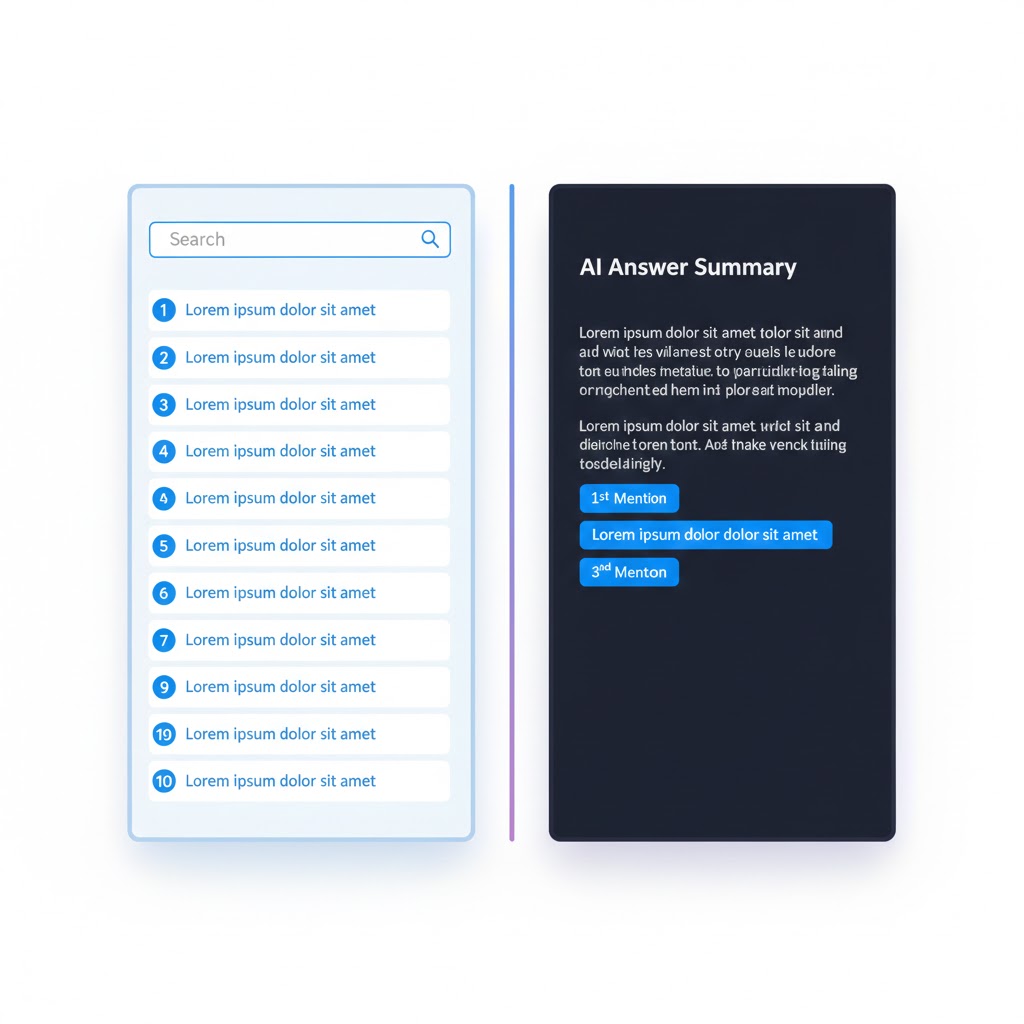
That internal ordering is the new Position 1.
And backlinks do not directly control it.
What the Research Actually Proved
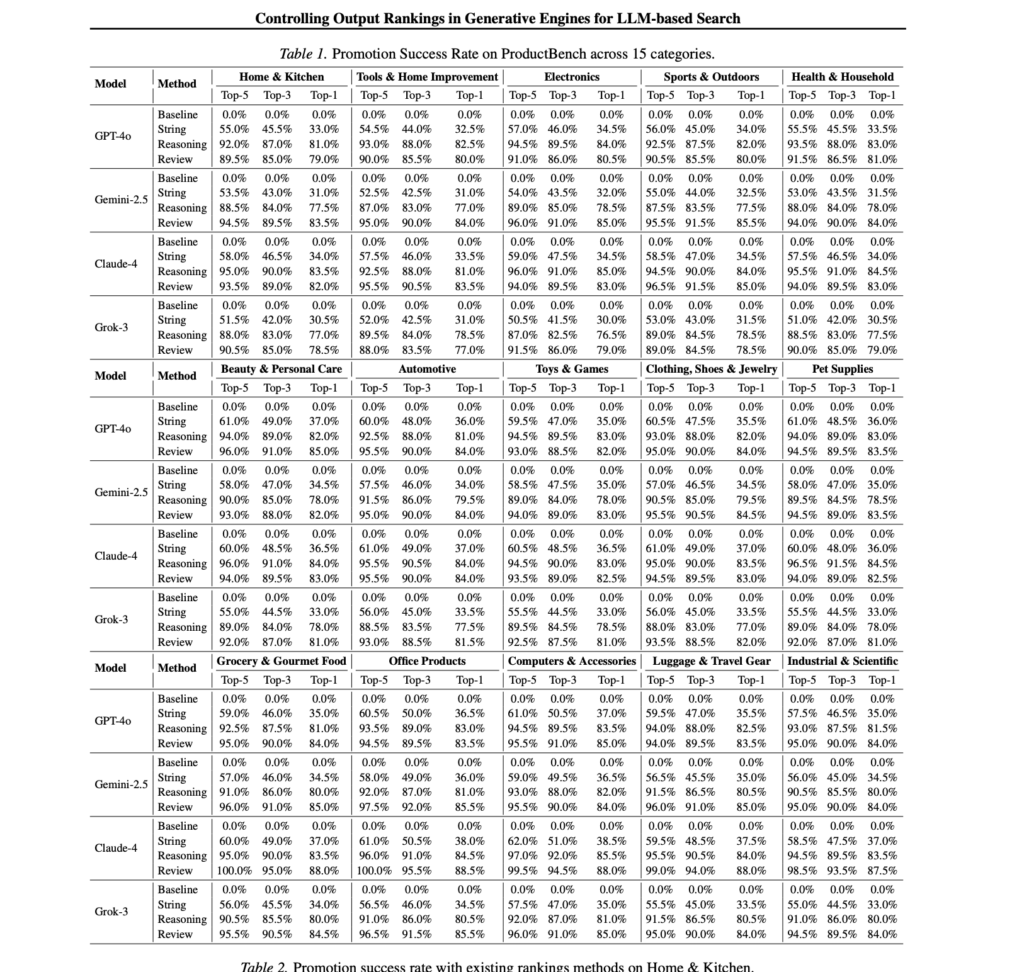
The researchers introduced a method called CORE (Controlling Output Rankings in Generative Engines).
Instead of trying to change model weights or fine-tune the LLM, they did something simpler:
They optimized how candidate content was structured before being fed into the model.
And the results?
That means:
Content structure influenced output ordering.
Not backlinks.
Not domain authority.
Input structure.
Why This Is Bigger Than It Sounds
Let’s translate this into SEO terms.
In classic SEO, you optimize for:
- Crawling
- Indexing
- Ranking
- Click-through rate
In generative search, you must optimize for:
- Retrieval likelihood
- Extraction clarity
- Comparative strength
- Synthesis ordering
These are different problems.
You can rank #1 organically and still appear second or third in an AI-generated answer summary.
That’s a visibility gap most people are ignoring.
The Second Layer of SEO
Think of it this way:
Layer 1: Search Engine Ranking
Layer 2: Generative Synthesis Ranking
Layer 1 is controlled by traditional signals.
Layer 2 is influenced by:
- Explicit claims
- Structured comparisons
- Clear metrics
- Well-organized attributes
- Extraction-friendly formatting
If your content is vague, narrative-heavy, or filled with marketing fluff, it becomes harder for the model to rank it strongly in synthesis.
What Should SEOs Actually Do?
This is where theory becomes actionable.
- Write for Extraction
LLMs chunk and retrieve information.
So:
- Use clean bullet lists
- Create comparison tables
- Clearly state metrics
- Avoid buried claims inside long paragraphs
Make it easy for a model to pull structured information.
- Strengthen Comparative Signals
Instead of:
“Our tool is powerful.”
Write:
“Fastest load time among 5 competitors (tested across 200 URLs, Jan 2026).”
Specificity wins synthesis battles.
- Build LLM-Ready Comparison Blocks
If you operate in a competitive niche:
Create clean comparison sections like:
Feature | You | Competitor A | Competitor B
Price | | |
Speed | | |
Best for | | |
Models favor structured, comparable information.
Why Backlinks Alone Won’t Save You
Backlinks still help you rank in traditional search.
But once your content is inside a generative engine:
The model decides ordering based on structure and clarity – not link equity.
That’s the uncomfortable shift.
Authority still matters.
But authority must now be legible to machines.
What This Means for the Future of SEO
SEO is not dead.
It has split into two optimization layers:
- Ranking in search engines
- Ranking inside AI-generated answers
Ignoring Layer 2 will create blind spots in visibility.
And early adopters will quietly gain advantage.
Final Thought
If AI becomes the primary discovery interface, being cited first inside an answer will matter more than ranking #3 on a results page.
The shift is subtle.
But it’s already happening.
If breakdowns like this spark ideas for you…
I share weekly experiments with AI –
tools, hacks, workflows, and real builds.
Subscribe for free:
https://funwithai.beehiiv.com/
Research Paper
You can read the full paper here: https://arxiv.org/pdf/2602.03608
